
What are money and cryptocurrency backed by?
Money — it's just a piece of paper… Or is it? Let's study this complicated issue together.
People have used money for thousands of years, and its form has changed with history. We've already covered the nature of money in one of our articles. But what is behind money, and is there actually anything behind it? Let's take a closer look.
Commodity money and fiat money
Money is usually divided into two kinds: commodity money and fiat money.
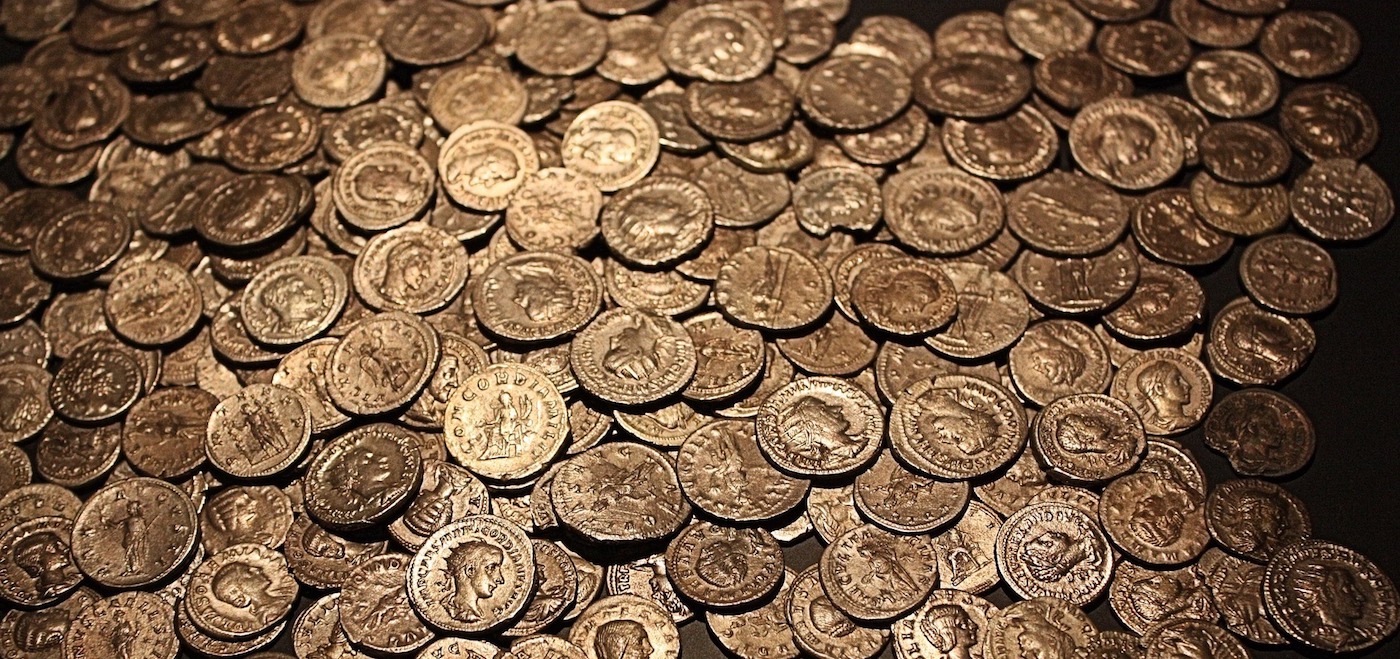
Commodity money has value in itself. A gold or silver coin is worth roughly as much as the metal it is made of: melt it down and the value is still there. In between sits paper money that can be exchanged for gold at a fixed price. The note itself is worth almost nothing, but it is a claim on metal in a vault.
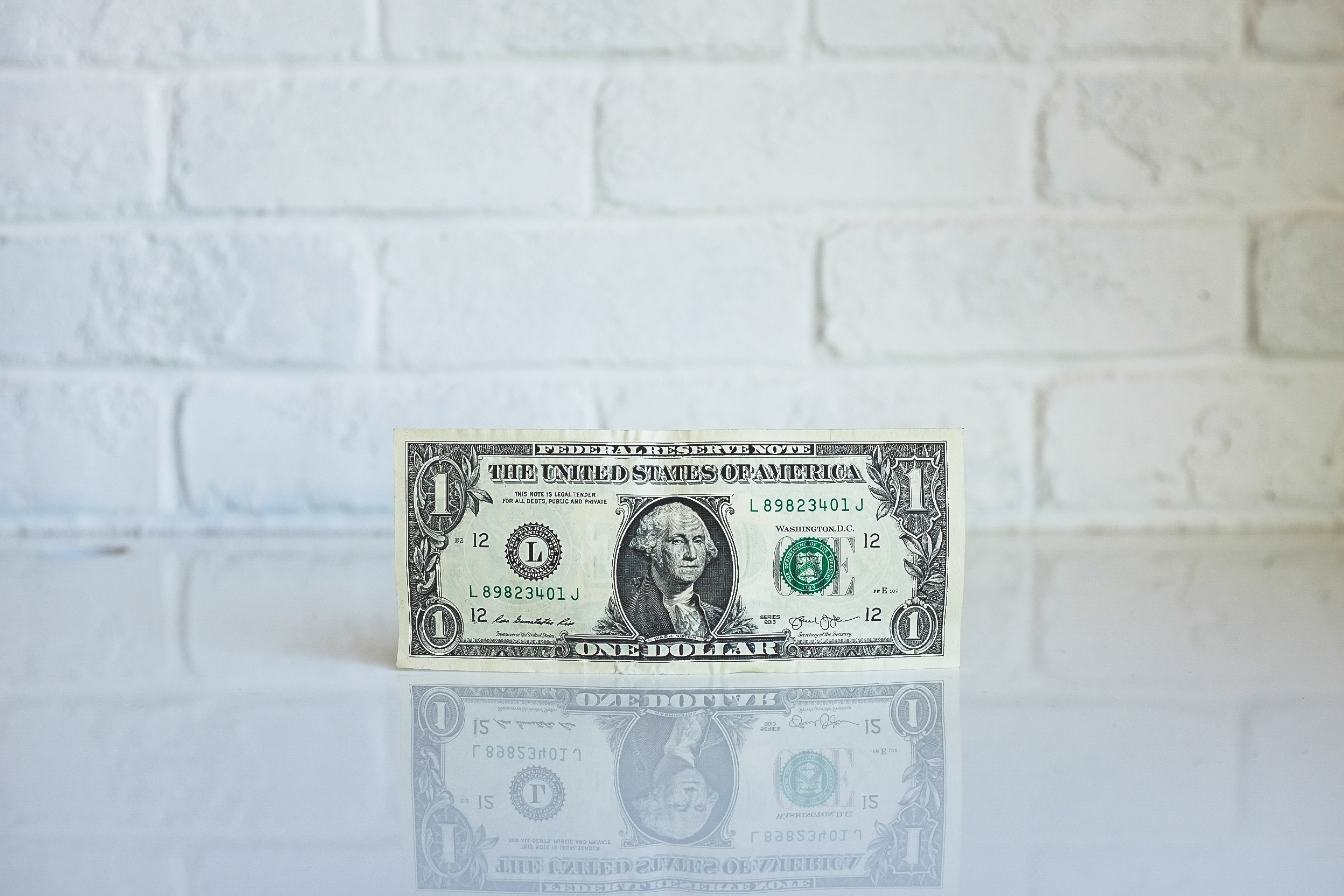
Fiat money is worth almost nothing in itself: you can't take a banknote to a bank and get gold for it, let alone a balance on your account. "Fiat" is Latin for "let it be": money is money because the state has declared it so. Today every national currency — the dollar, the euro, the pound and the rest — is fiat money.
But saying it is "backed by nothing" is wrong too. There are concrete things behind fiat money, and we'll get to them below. First, let's see how we got here.
Money backing throughout history
The gold standard
For a long time money was tied to metal. In the 19th century the leading economies moved one after another to the gold standard: the national currency could be exchanged for gold at a fixed price. Since each currency was worth a set amount of gold, exchange rates between them barely moved, which made trade between countries easier.
The downside: a country could only have as much money as its gold reserves allowed. When a lot had to be spent fast — on a war, for instance — gold became a bottleneck. When the First World War began, most countries suspended conversion into gold, and the world never returned to the old gold standard.
The Bretton Woods system: 1944–1973
In July 1944, delegates from 44 countries met in Bretton Woods, New Hampshire, to agree on a postwar monetary system. They also created the International Monetary Fund (IMF) and what became the World Bank. The deal: currencies were pegged to the dollar, and the dollar to gold at $35 per troy ounce. It was other countries' central banks, not private individuals, that could exchange dollars for gold.
The dollar became the world's main currency, and gold now backed only the dollar. Over time, far more dollars piled up outside the US than there was gold to back them. The US pressed other countries not to present their dollars for gold, but France under President Charles de Gaulle kept converting, and US gold reserves kept shrinking.
On August 15, 1971, President Richard Nixon closed the so-called "gold window": the US stopped exchanging foreign central banks' dollars for gold. That was the real end of the link between money and gold. For about a year and a half countries tried to hold on to their pegs, and in 1973 they gave up and let their currencies float.
The Jamaica Accords: 1976
The new rules were written down after the fact. In January 1976, at a meeting in Kingston, Jamaica, IMF members agreed to amend the Fund's charter; the amendment took effect in 1978. Its key points: gold stopped being the measure of currency values, and each country chooses its own exchange rate regime.
That detail is often simplified to "exchange rates are set by the market." In reality, regimes differ:
- Floating: the rate is set by the market, though the central bank may step in. The US dollar and the euro float, for example, and so has the Russian rouble since November 2014.
- Peg: the central bank holds the rate against another currency within a narrow band. The Hong Kong dollar, for example, has been pegged to the US dollar since 1983 and stays within HK$7.75–7.85 per dollar.
- Shared currency: several countries give up their own currency and use one together, like the euro area.
This system, with amendments, is still in place. It has drawn criticism, especially after the 2008–2009 crisis, but there is no replacement for it yet.
So what is money backed by now?
Modern money can't be exchanged for gold at a fixed price. Instead there are several supports, and money rests on all of them at once.
The central bank's obligations. Ruble banknotes and coins are issued by the Bank of Russia, and dollar banknotes by the US Federal Reserve; for them it is a liability. Dollar banknotes are issued against collateral, mostly government securities; in Russia, the law says Bank of Russia banknotes are its unconditional obligations backed by all its assets. You can't exchange a banknote for those assets, but the central bank stands behind it with its balance sheet.
The law. The state declares its currency legal tender: it is used to settle payments and debts. Whether a shop must accept cash depends on the country. In Russia, Bank of Russia notes and coins are the only legal means of cash payment, while in the US no federal law requires a private business to accept cash.
Taxes. Taxes are paid in the national currency. So everyone who works or does business in the country needs it — there is guaranteed demand for it.
The economy. Money buys the goods and services the economy produces. The larger and more stable the economy, the more people want to hold its currency.
Trust. All of the above works as long as people believe that tomorrow the money will buy about as much as it does today. Money is essentially an IOU that everyone trusts.
That's where central banks come in. Most of them are independent from the government, and their job is to protect the purchasing power of money — to keep inflation low and predictable. They do it by setting interest rates and supervising banks. When trust in a currency is undermined — for example, when the government pays its bills by printing money — people start getting rid of it and switch to foreign currency, and in the worst case hyperinflation follows. So the weak spot of fiat money is not the lack of gold but how responsibly it is managed.
One more detail: cash is only a small share of money. Most of it is money in bank accounts, created by commercial banks when they lend. Behind it stand the bank's obligations to you and the central bank's supervision.
What backs bitcoin and other cryptocurrencies?
With crypto, it depends on which one.
Bitcoin and similar cryptocurrencies are not backed by anything external: there is no central bank, no collateral and no tax obligation behind them. Their issuance is limited by the network's rules, and their value rests on people being willing to buy and accept them. That's why their price can swing sharply in a short time. There is an upside too: issuance doesn't depend on the decisions of a single government or bank.
Stablecoins work differently. They are usually pegged to a fiat currency, most often the dollar, and the issuing company promises to hold reserves — cash in accounts, short-term government bonds. But that is a private company's promise, not a central bank's: how reliable it is depends on what's actually in the reserves. Some stablecoins have lost their peg when trust disappeared.
So the value of any money, fiat or crypto, ultimately rests on trust. The difference is what stands behind that trust.
What this means for you
The purchasing power of money changes — slowly in some places, quickly in others. So it matters not only how much money you have, but also where it goes and what you do with it. If you're saving for years ahead, read our article on investing.